 Free books onlineFree books online
Main » Comics » Mother Fletcher Presents Stanley R. Sogg
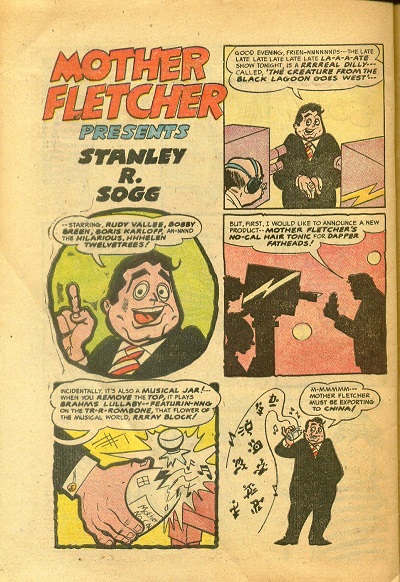
Mother Fletcher Presents Stanley R. Sogg was a humor comic feature adapted
from a Jackie Gleason
television sketch, appearing in 1950s TV tie-in comic books. The character
Stanley R. Sogg is portrayed as a timid, awkward, and unlucky young man, often
caught in uncomfortable or embarrassing situations.
In the comics, Stanley’s
problems are usually triggered by Mother Fletcher, a domineering, overbearing
figure who constantly interferes in his life. The stories focus on social
anxiety, misunderstandings, and gentle slapstick humor, with Stanley frequently
serving as the sympathetic victim of circumstances beyond his control.
These
comic strips were short and self-contained, emphasizing character-based comedy
and exaggerated personalities, and they reflected the style of early television
sketch humor translated into comic book form.
Mother Fletcher Presents Stanley R. Sogg originated as a television comedy
sketch created and performed by Jackie Gleason in the early 1950s. The sketch
centered on Stanley R. Sogg, a shy, nervous young man whose life is constantly
disrupted by the overbearing and manipulative Mother Fletcher. The character
became popular for its awkward, situational humor and exaggerated authority
figure.
Following the success of Gleason’s television characters, Stanley R.
Sogg was adapted into comic book form during the 1950s, appearing in Jackie
Gleason–themed humor and TV tie-in comics. These comics followed the industry
trend of bringing recognizable TV comedy characters to print for a wider
audience.
The comic stories were short, standalone humor pieces, focusing on
Stanley’s repeated misfortunes and Mother Fletcher’s domineering behavior. Much
like the TV sketches, the humor relied on character dynamics, visual gags, and
escalating misunderstandings rather than long story arcs.
As television
tie-in comics faded in popularity toward the end of the 1950s, Mother Fletcher
Presents Stanley R. Sogg disappeared from comic publication. Today, the comics
are remembered as part of Jackie Gleason’s broader comedy legacy and the golden
age of television-based comic books.