 Free books onlineFree books online
Main » Fiction and fantasy » The Time Machine by H. G. Wells
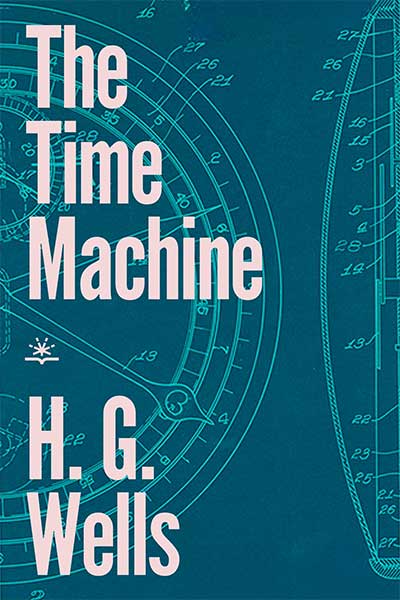
“The Time Machine” (1895) by H. G. Wells is a science fiction novel that
follows an unnamed scientist, known as the Time Traveller, who invents a machine
that allows him to travel far into the future.
He arrives in the year
802,701 A.D., where he encounters two distinct species: the Eloi, gentle but
weak humans living above ground, and the Morlocks, industrial underground
dwellers who prey on the Eloi. Through his journey, the Time Traveller observes
the effects of evolution, social inequality, and the passage of time.
The
novel explores themes of time, human progress and decay, class struggle, and the
consequences of technological advancement, and it is considered a foundational
work of science fiction, inspiring countless adaptations and future explorations
of time travel in literature and media.
H. G. Wells (1866–1946) was an English writer, journalist, and futurist,
widely regarded as a pioneer of science fiction. He is best known for novels
such as “The Time Machine,” “The War of the Worlds,” “The Invisible Man,” and
“The Island of Doctor Moreau.”
Born in Bromley, England, Wells had a keen
interest in science and social issues, which influenced his writing. His works
often combined imaginative storytelling with social commentary, exploring themes
of technology, human progress, ethics, and the consequences of scientific
advancement.
Wells is celebrated as the “father of science fiction”, and
his visionary ideas about the future, society, and science continue to influence
literature, film, and popular culture.