 Free books onlineFree books online
Main » Fiction and fantasy » The Strange Case of Dr. Jekyll and Mr. Hyde by R. L. Stevenson
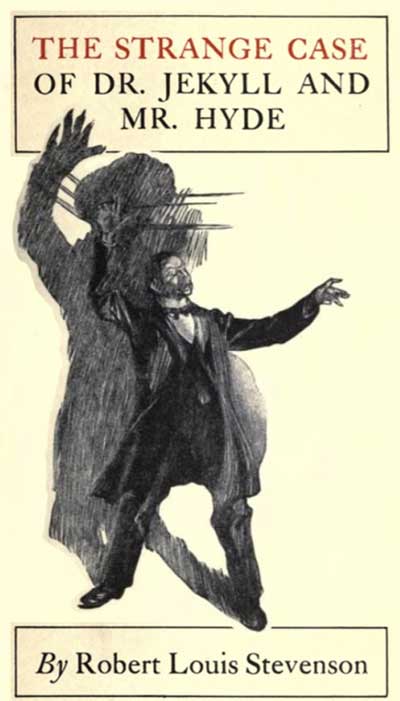
The Strange Case of Dr. Jekyll and Mr. Hyde by Robert Louis Stevenson is a
gothic novella about human duality, morality, and the conflict between good and
evil.
Set in Victorian London, the story is told mainly through the lawyer
Mr. Utterson, who becomes concerned about the strange relationship between his
friend Dr. Henry Jekyll, a respectable scientist, and the violent, cruel Edward
Hyde.
Dr. Jekyll creates a chemical potion that allows him to separate his
good and evil sides, transforming physically and mentally into Mr. Hyde. While
Jekyll initially believes he can control these transformations, Hyde grows
stronger and more dangerous, committing acts of violence and murder.
Eventually, Jekyll loses the ability to control when the transformation occurs.
Realizing that Hyde will permanently take over, Jekyll chooses death, bringing
Hyde’s existence to an end.
The novella is famous for its powerful metaphor
of split personality, showing how suppressing darker impulses can lead to
destruction. It remains a key work of gothic and psychological literature.
Robert Louis Stevenson (1850–1894) was a Scottish novelist, poet, and travel
writer, famous for adventure stories and psychological fiction. He is best known
for Treasure Island, The Strange Case of Dr. Jekyll and Mr. Hyde, and Kidnapped.
Stevenson’s writing often explores good and evil, identity, morality, and
adventure, blending vivid storytelling with deeper philosophical ideas. Despite
lifelong poor health, he traveled widely and drew inspiration from his journeys.
In his later years, Stevenson settled in Samoa, where he was respected by the
local people and known as Tusitala (“the teller of tales”). He died in 1894,
leaving a lasting influence on adventure and psychological literature.