 Free books onlineFree books online
Main » Fiction and fantasy » Frankenstein by Mary Shelley
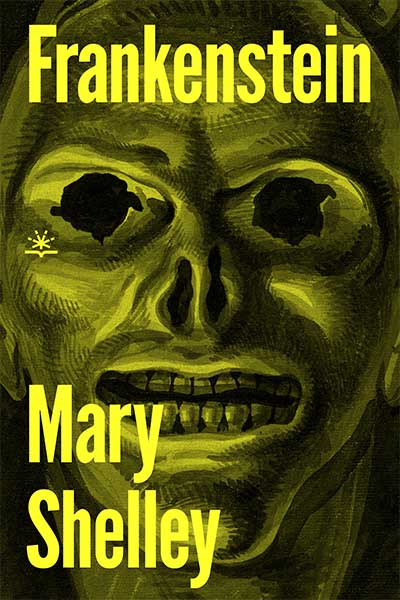
“Frankenstein; or, The Modern Prometheus” (1818) by Mary Shelley is a Gothic
novel about scientist Victor Frankenstein, who creates a living being from
assembled body parts. Hoping to conquer death and achieve scientific greatness,
Victor brings his creature to life—but horrified by the result, he abandons it.
The Creature, intelligent and sensitive, suffers rejection and loneliness
because of his frightening appearance. His pain turns into anger, and he seeks
revenge on Victor, leading to tragedy for both creator and creation. The story
unfolds through layered narratives, including Victor’s own account and the
Creature’s perspective.
The novel explores themes of ambition,
responsibility, isolation, and what it means to be human, raising lasting
questions about science, ethics, and the consequences of unchecked desire for
knowledge.
Mary Shelley (1797–1851) was an English novelist best known for writing
“Frankenstein; or, The Modern Prometheus.” She was the daughter of political
philosopher William Godwin and feminist writer Mary Wollstonecraft, and the wife
of Romantic poet Percy Bysshe Shelley.
Mary Shelley began Frankenstein
when she was a teenager during a stay in Switzerland in 1816—often called the
“Year Without a Summer.” Beyond *Frankenstein*, she wrote other novels such as
“The Last Man” and “Valperga,” as well as travel writing and biographies.
Her work often explores themes of science, ethics, identity, and human
emotion, and she is regarded as a major figure in both Gothic literature and the
early development of science fiction.